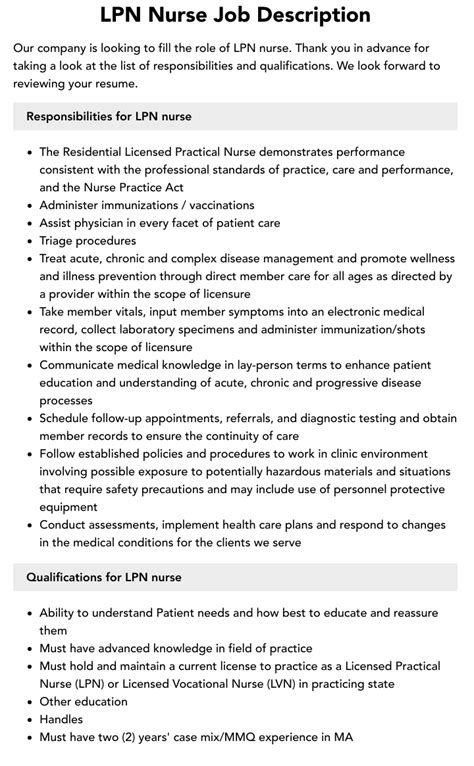
As a Licensed Practical Nurse (LPN), you have the opportunity to choose from a variety of rewarding career paths. From hospitals to community clinics, LPNs play a crucial role in patient care. This guide is designed to help you explore top LPN job opportunities, understand the steps needed to secure these roles, and address common pain points you might face in your search. Whether you are new to the field or looking to advance your career, this guide provides practical, actionable advice to ensure you find the best fit for your skills and goals.
Understanding Your LPN Career Path
Becoming an LPN is a decision that offers both personal satisfaction and professional growth. LPNs work under the supervision of registered nurses and physicians to provide essential care to patients. Your role might include administering medications, dressing wounds, assisting with daily living activities, and documenting patient progress. Understanding the skills and qualities required for LPN positions will help you focus your search and tailor your application.
Getting Started: The Essential Steps to Landing an LPN Job
Entering the LPN field can seem daunting, but with the right approach, you can navigate this process smoothly. Here’s a detailed roadmap to get you started:
Step 1: Education and Certification
Before applying for LPN positions, you need to meet educational and certification requirements. Typically, you will need to complete a state-approved LPN program. This usually involves about one year of full-time study, leading to a diploma or an associate’s degree in practical nursing.
- Immediate Action: Enroll in an accredited LPN program to start your education journey.
- Essential Tip: While studying, practice basic nursing skills through simulations or shadowing to gain real-world experience.
- Common Mistake: Overlooking the importance of clinical hours in your program. Make sure to complete all required hours to meet full qualification.
Step 2: Licensure
Upon completion of your program, you must pass the National Council Licensure Examination for Practical Nurses (NCLEX-PN) to obtain your LPN license. This examination tests your knowledge and skills in various areas of practical nursing.
- Immediate Action: Schedule your NCLEX-PN exam after finishing your program.
- Essential Tip: Use preparation books, practice exams, and online courses to improve your chances of passing the NCLEX-PN.
- Common Mistake: Failing to plan study time effectively. Create a detailed study schedule leading up to your exam day.
Step 3: Job Search
With your education and certification in hand, it’s time to start your job search. Look for LPN positions in various healthcare settings, including hospitals, clinics, long-term care facilities, and schools.
- Immediate Action: Create a professional resume highlighting your education, skills, and any clinical experience.
- Essential Tip: Customize your resume for each job application to emphasize the most relevant experience and skills.
- Common Mistake: Submitting a generic resume for all applications. Personalize your application for each job to increase your chances.
Top LPN Job Opportunities
In today’s healthcare landscape, there are numerous opportunities for LPNs. Here are some of the top roles you might consider:
Hospital LPNs
Hospital LPNs provide care to patients in a variety of settings including emergency rooms, medical-surgical units, maternity wards, and intensive care units. The fast-paced environment of a hospital offers a dynamic and challenging work setting.
Long-Term Care LPNs
Working in long-term care facilities, LPNs provide ongoing care to patients with chronic illnesses or those recovering from surgery or injury. This setting allows you to build long-term relationships with patients and their families.
Community Health LPNs
Community health LPNs work in public health clinics, community centers, and schools to provide preventive care, health education, and screenings. This role is ideal for those who want to focus on community health and outreach.
School LPNs
School LPNs work in K-12 schools to provide care to students with acute or chronic health conditions, administer medications, and monitor health issues. This role is great for those who enjoy working with children and contributing to their health and well-being.
Frequently Asked Questions (FAQ)
What are the job prospects for LPNs?
The job outlook for LPNs is positive. According to the Bureau of Labor Statistics, employment of LPNs is expected to grow 9 percent from 2020 to 2030, much faster than the average for all occupations. The demand is particularly strong in home health care services, hospitals, and outpatient care centers. Opportunities will continue to grow as the healthcare system expands to meet the needs of an aging population.
How do I advance my career as an LPN?
To advance your career, consider pursuing additional certifications or training in specialized areas such as gerontology, wound care, or intravenous therapy. Continuing education and obtaining a bachelor’s degree in nursing (BSN) can also lead to advanced roles, such as becoming a registered nurse (RN) or pursuing specialized nursing roles. Networking with other professionals in your field and attending workshops and conferences can provide valuable opportunities and insights.
Advanced LPN Opportunities
If you’re looking to further your career, here are some advanced opportunities available to skilled LPNs:
Certified Nursing Assistant (CNA) Instructor
If you have experience and a passion for teaching, consider becoming a CNA instructor. This role involves training and mentoring new nursing assistants in accredited programs, helping them acquire the necessary skills to enter the healthcare field.
- Step-by-Step Guidance:
- Obtain additional training or certifications in education or instructional methods.
- Gain several years of experience as an LPN.
- Apply for a teaching position at a nursing school or training center.
Clinical Nurse Specialist (CNS)
A Clinical Nurse Specialist (CNS) takes on advanced clinical roles, focusing on specific patient populations or health issues. They often work in hospitals, clinics, or public health settings to provide expert care and improve patient outcomes.
- Step-by-Step Guidance:
- Earn a master’s or doctoral degree in nursing.
- Gain extensive clinical experience in a specialized area of nursing.
- Develop expertise in clinical practice, research, and patient education.
- Apply for positions as a CNS in hospitals, clinics, or other healthcare settings.
Case Manager
LPNs can also work as case managers, coordinating and managing patient care to ensure the best outcomes. This role often involves working with patients with complex health needs, coordinating services, and facilitating communication between healthcare providers.
- Step-by-Step Guidance:
- Gain several years of experience as an LPN.
- Develop skills in case management, such as patient assessment, planning, and resource coordination.
- Obtain a bachelor’s degree in nursing or related field.
- Apply for case management positions in hospitals, clinics, or insurance companies.
Conclusion
The journey to becoming an LPN and advancing in your nursing career is filled with opportunities for growth and fulfillment. By following the steps outlined in this guide, leveraging real-world examples, and addressing common challenges, you can navigate your way to the best opportunities available. Whether you’re just starting out or looking to advance your career, this guide provides the practical, actionable advice you need to succeed in the dynamic field of practical nursing.